The Thermostat Is the Decision-Maker for Your Heating
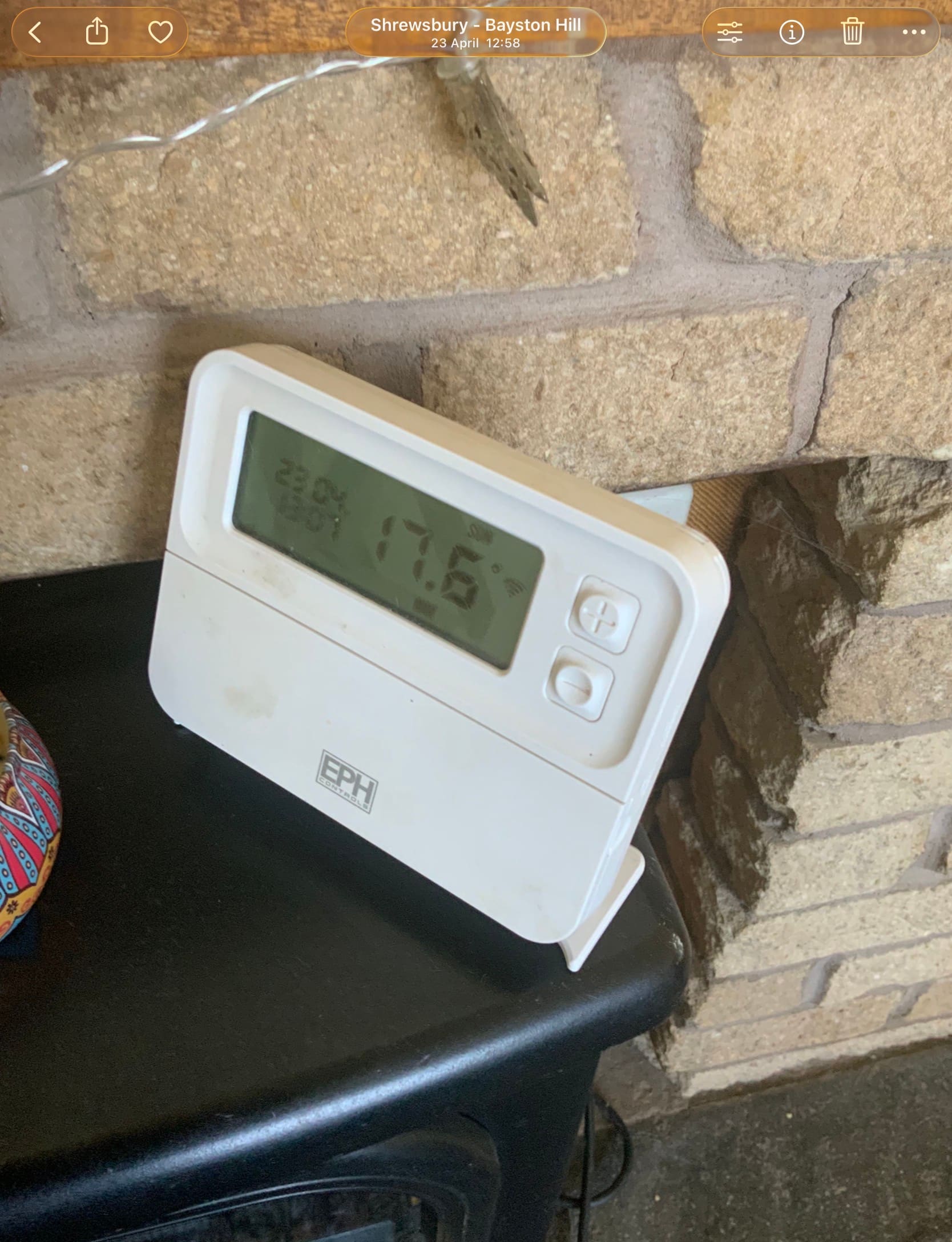
One of my biggest bugbears is wireless thermostats placed in completely unsuitable locations. I've found thermostats sitting on sunny window sills, above fireplaces, next to televisions, beside broadband routers, in draughty hallways, hidden behind furniture, and sitting on coffee tables.
The thermostat is effectively the decision-maker for your heating system. If it's measuring the wrong temperature, the heating system will make the wrong decisions — running too long, cutting off too early, or cycling on and off repeatedly.
This is a free fix. Moving the thermostat to the right location costs nothing and can make a noticeable difference to both comfort and energy use.
Locations That Give False Readings
Where Your Thermostat Should Be
Ideally, a wireless room thermostat should be mounted on an internal wall, at around 1.5 metres (5 feet) above floor level. It should be away from direct sunlight, away from radiators, televisions, and other heat sources, and located in a room that is representative of the home — typically a living room or hallway that is used regularly.
The aim is to measure the house, not a local hot spot or cold draught. A thermostat in the right place means your boiler runs for exactly as long as it needs to — no more, no less.
Ideal thermostat placement checklist
The Real-World Energy Impact
A thermostat placed next to a radiator can cause the boiler to cut off 30–60 minutes earlier than it should on a cold day. A thermostat in a draughty hallway can cause the boiler to run an extra hour. Neither scenario is comfortable, and both waste energy.
There's no precise figure I can give you — it depends on your home, your tariff, and how badly placed the thermostat is. But this is consistently one of the first things I check on every survey, because it's the cheapest fix with the most immediate impact.
Check the Batteries Too
And my biggest thermostat bugbear of all? Flat batteries. I've lost count of the number of times I've found a thermostat quietly flashing a low battery warning while homeowners consider expensive heating upgrades. Before spending money on improvements, check the batteries, the thermostat location, and the heating schedule. Sometimes the simplest fixes deliver the biggest improvements.
Free Fix — But Check Your Unit Rates Too
Fixing your wireless thermostat placement costs £0 and can stop your heating system making the wrong decisions. But if your baseline unit rates are still too high, physical fixes are only doing half the job.
Energy Guardian is an independent UW Partner. Referral link: uw.co.uk/ref/v2/partner/AQ5419